If you're new to Bushwick — or if you've lived here twenty years and never figured out who actually does matcha well — this is the post for you. We get asked the question almost daily at the counter: where's the best matcha in Bushwick? The honest answer involves a little context, a few opinions, and a quiet pitch for our own. Here's what we know.
What "ceremonial-grade matcha" actually means
Most cafés don't talk much about the matcha they serve. The label says "matcha latte" and the customer either likes it or doesn't. But there's a real difference between matcha grades, and once you taste it side by side, you can't unsee it.
Ceremonial-grade matcha is made from the youngest, most tender tea leaves harvested in the first spring picking, stone-ground to a powder fine enough to feel like cocoa. It's vivid green — almost neon — when it hits the whisk. Drunk on its own with hot water, it tastes savory, slightly sweet, and grassy in a clean way.
Culinary-grade matcha comes from later harvests, larger leaves, coarser grinds. It's perfectly fine for baking matcha cookies or stirring into cake batter — that's literally what it's designed for. But when cafés use culinary-grade in their lattes (and many do, because it's cheaper), the result tastes bitter, chalky, sometimes a little astringent. The sweetness has to come from sugar, not the tea.
At Café Mia, every matcha drink we serve uses ceremonial-grade matcha. Not because it's a marketing line — because the difference is too obvious to pretend it isn't there.
The cheapest matcha at any Brooklyn cafe is the customer's second matcha — the one they don't order.
The matcha scene in Bushwick
Bushwick has a real matcha culture now, in a way that wasn't true even five years ago. Walk Broadway between Halsey and Myrtle and you'll pass at least four spots that pour matcha lattes — some great, some honestly mediocre. The neighborhood is also on the receiving end of a wave of matcha appreciation that started in Williamsburg, moved through Bedford-Stuyvesant, and landed here.
What makes Bushwick a natural home for matcha is the same thing that makes it a home for great coffee, vintage clothing, and small galleries: people here actually pay attention to what they're consuming. They notice when something's been made with care.
What to look for in a Bushwick matcha
- Color. A bright, almost electric green is a sign of ceremonial-grade. Dull, army-green matcha is usually older or culinary-grade.
- Foam. A whisked matcha should produce a fine, creamy foam — not bubbles, not a thin crema. If it looks flat, the powder is probably old or under-whisked.
- Aftertaste. Good matcha leaves a slightly sweet, vegetal finish. Mediocre matcha leaves a bitter scrape on the back of your tongue. The first sip tells you everything.
- The price-vs-quality ratio. Real ceremonial-grade matcha costs $50–$80 per 30g tin wholesale. A $4 matcha latte is almost always culinary. A $5.50–$7.50 matcha latte at an indie café is in the right zone for the real thing.
How we pour matcha at Café Mia
We sift the powder before whisking — even 0.5g of unsifted matcha can clump and ruin the texture. We use water that's been cooled to about 175°F (not boiling — boiling water scalds the leaf and turns sweet matcha bitter). We whisk with a chasen, the bamboo whisk meant for the job, in a quick zigzag motion until the surface is glossy and the foam has tightened.
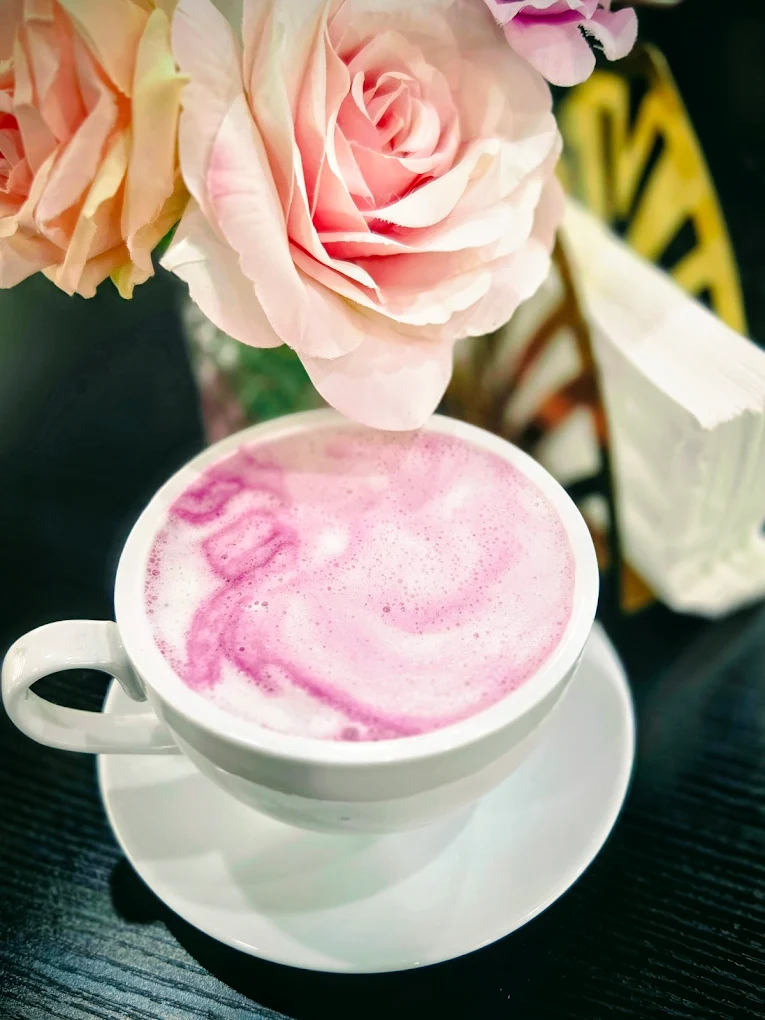
Then it's combined with steamed milk for a hot latte, or shaken with ice and a touch of cane syrup for the iced version. The pink rose latte you see on our Instagram is matcha plus rose syrup — it's pretty, but the version that's actually our most ordered is the plain iced matcha latte with oat milk. Quietly the best thing we make.
Ask for a "double matcha" if you want it strong (we use 4g instead of 2g). Or "extra-foam" if you like the texture. We won't be offended; we'll just nod and pull out a bigger whisk.
How to order matcha at any cafe
If you're new to matcha, the menu can be intimidating. Here's the actual decision tree:
- Matcha latte (hot) — matcha + steamed milk. Cozy, savory-sweet, the classic.
- Iced matcha latte — matcha + cold milk over ice. Lets the natural sweetness through; our top seller.
- Matcha shot — just whisked matcha in 2oz of water, no milk. Pure tea, more intense, more caffeine-forward. About 40% of customers who order this come back for it the next day.
- Matcha lemonade — matcha + lemonade over ice. Sounds weird, tastes incredible. Summer-only at most spots, year-round at us.
- Strawberry / rose / honey-lavender matcha — flavored variants. Order if you like sweeter drinks. Order black if you want to actually taste the tea.
Other matcha spots in Bushwick worth visiting
We're not the only cafe in Bushwick that takes matcha seriously, and we'd be doing the neighborhood a disservice if we pretended otherwise. There are a handful of other spots that pour matcha well — different vibes, different signature drinks, all worth trying. The Bushwick coffee community is small enough that we know each other; nobody's mad if you cafe-hop. We'd rather you fall in love with great matcha at any Bushwick spot than settle for a watered-down one elsewhere.
If you only have time for one stop, of course we hope it's us — 1128 Broadway, two minutes from the J/M/Z at Kosciuszko Street, open daily 8 AM to 5 PM. Bring your laptop, bring a friend, bring your dog (we've got water bowls at the door). We'll have something green and bright waiting.
Frequently asked questions about matcha
Where can I get the best matcha in Bushwick?
Café Mia at 1128 Broadway is widely regarded as one of the best matcha spots in Bushwick. We use ceremonial-grade matcha and serve it hot, iced, or as a seasonal flavored drink (rose, strawberry, lavender depending on the season).
What's the difference between ceremonial-grade and culinary matcha?
Ceremonial-grade is made from the youngest, first-spring tea leaves, stone-ground to a fine powder, and meant for drinking. Culinary-grade is harvested later, ground coarser, and intended for baking. Many cafés use culinary-grade in lattes to save cost — the drink turns out bitter and gritty. Ceremonial-grade is what you want in a latte.
Should I order matcha hot or iced?
Both are great. Hot shows off the savory umami of the tea. Iced highlights the natural sweetness because cold mutes bitterness. We sell more iced year-round than hot — even in winter.
Is matcha caffeinated?
Yes — a matcha latte has about 70mg of caffeine, around half a cup of brewed coffee. Matcha's caffeine pairs with L-theanine, which gives a calmer, longer alertness without the jitter or crash.
Does Café Mia offer dairy-free matcha?
Yes. We make matcha with whole milk, oat milk, almond milk, or just water — no surcharge for plant milks.
If this guide was useful, the easiest way to thank us is to come visit. Or, if you've already been: a Google review goes a remarkably long way. Thanks for reading.