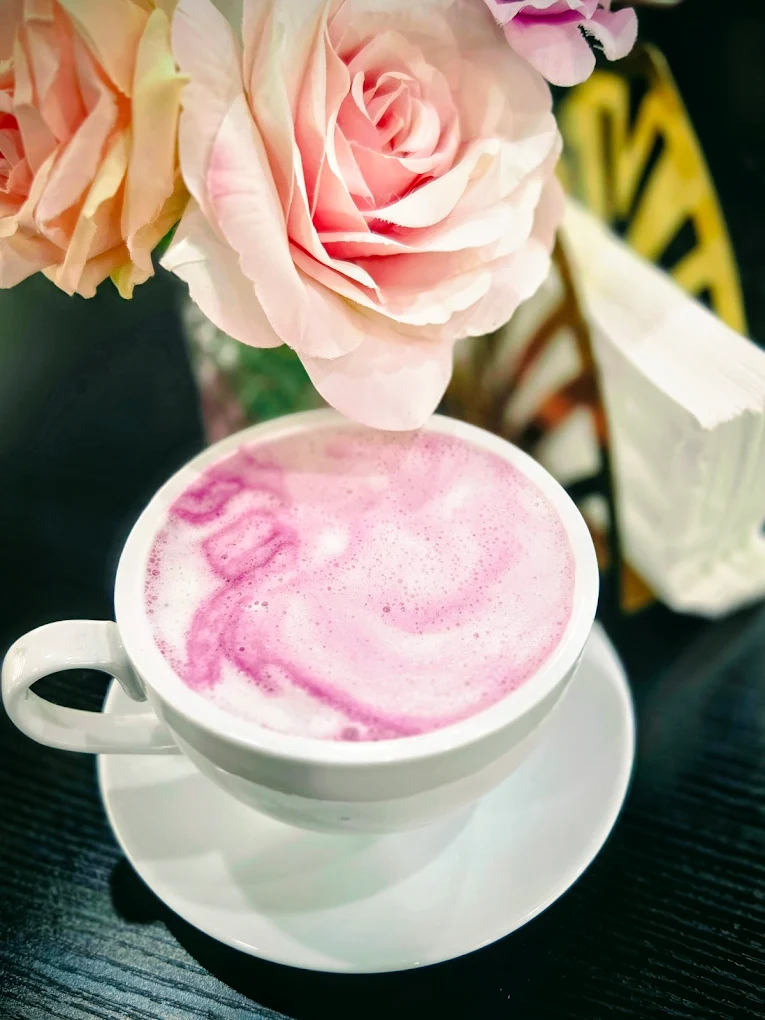
Walk into any cafe in Brooklyn and order a matcha latte. Walk into any cafe in Brooklyn the next day and order another one. They will not taste the same. The difference is almost always grade — and once you understand matcha grades, you understand why some matcha is unforgettable and some is just a green latte.
The short answer
Ceremonial-grade matcha is made from the youngest, most tender tea leaves of the first spring harvest, shaded for weeks before picking, hand-selected, stone-ground to a powder fine enough to feel like cocoa. It's bright neon green. Drunk plain, it tastes savory, slightly sweet, vegetal in a clean way. It's expensive because making it is laborious.
Culinary-grade matcha comes from later harvests, larger and tougher leaves, ground coarser, sometimes mixed with stems and oxidized bits. It's olive-green or dull. It tastes bitter and astringent on its own, which is fine because it's designed for baking — where sugar and fat balance the bitterness.
Cafes that lead with culinary-grade in their lattes save money. Customers pay the price in flavor.
The Japanese tea ceremony origin
"Ceremonial" isn't a marketing term — it's literal. The grade is named after the Japanese tea ceremony (chanoyu), where matcha is whisked with hot water and drunk straight, no milk, no sugar. A matcha that's going to be served plain has nowhere to hide. It has to be smooth, balanced, and specifically not bitter — because in chanoyu, that's the whole drink.
Cafes co-opted the term over the past 15 years, and now any matcha brand can call their product ceremonial-grade. There's no certification. So what you're really evaluating, when you see "ceremonial-grade" on a menu, is whether the cafe knows what the term means — and whether they buy matcha that lives up to it.
How to tell the grades apart
By color
Ceremonial-grade is bright, almost electric green — like a neon sign. Culinary is dull olive or yellow-green. The color comes from chlorophyll, which is highest in young, shade-grown leaves and lower in older, sun-exposed ones.
By smell
Open a tin of ceremonial-grade and it smells like fresh-cut grass and seaweed. Culinary smells flatter, sometimes a little dusty.
By taste
Ceremonial-grade has umami — that savory, almost-broth note — followed by a clean sweetness. Culinary has more bitterness up front and a chalky aftertaste.
By price
Real ceremonial-grade matcha costs $50–$80 per 30g tin wholesale. Culinary is $10–$25 per 100g. If a cafe is selling a $4 matcha latte, the math works only with culinary-grade.
Why the grade matters in milk drinks
People assume that because milk and sugar mask flavor, you can use cheaper matcha in a latte and the customer won't know. They will. Matcha bitterness comes through milk; matcha grit comes through milk; matcha that's been sitting open too long tastes stale through milk. The grade shapes the entire drink.
A latte made with ceremonial-grade matcha tastes vivid and balanced. A latte made with culinary-grade tastes dull and slightly bitter — even with a heavy pour of cane syrup to mask it.
The cheapest part of a matcha latte is the matcha. The cafe that saves $0.30 per drink by switching to culinary loses a customer who notices.
Caffeine and L-theanine
Matcha contains both caffeine and L-theanine, an amino acid that produces calm focus. The combination is what gives matcha its specific energy curve — alert without jittery, productive without crashy. Coffee gets you to alert; matcha gets you to flow.
A typical 8oz matcha latte at Café Mia has roughly 70mg caffeine — about half a cup of brewed coffee. The L-theanine smooths the curve. Most customers report that matcha gives them about 4 hours of steady alertness, where coffee gives them 2 hours of intensity followed by a dip.
How matcha is harvested and made
Quick version of the production process, because it explains the price:
- Shading. Tea bushes are shaded with bamboo or cloth for 3–4 weeks before harvest. Shading boosts chlorophyll and L-theanine.
- Hand-picking. The first-spring harvest is hand-picked. Only the youngest, most tender leaves are selected for ceremonial-grade.
- Steaming. Leaves are quickly steamed to halt oxidation, locking in the green color.
- Drying and de-stemming. Leaves are air-dried, then stems and veins are removed by hand.
- Stone-grinding. The leaves (now called "tencha") are stone-ground in granite mills. A traditional grind produces only 30g of matcha per hour.
That last step is why ceremonial-grade is expensive. Stone-grinding is slow. Faster industrial grinding produces matcha that's coarser and oxidizes faster.
What we use at Café Mia
Every matcha drink we serve uses ceremonial-grade matcha. That's not a marketing claim — it's the only matcha we keep behind the counter. We don't have culinary-grade for "regular" lattes and ceremonial-grade for premium pours. We just have one grade, and it's the good one.
Our matcha rotation comes from Japanese producers we've vetted, sometimes through importers, sometimes direct. The specific tin changes seasonally because matcha freshness matters — opened tins lose color and flavor within 2–3 weeks.
How to order matcha well
- Iced matcha latte with oat milk. The most forgiving introduction.
- Hot matcha latte. The traditional preparation. Best on a cool morning.
- Matcha shot. Just whisked matcha in 2oz hot water, no milk. The way to actually taste the tea.
- Iced matcha lemonade. Sounds weird, tastes incredible. Summer-perfect.
If you want to try matcha for the first time, start with the iced latte and oat milk. If you've had matcha before and want to know if a cafe takes it seriously, order the shot. The shot has nowhere to hide.
Frequently asked questions
What is ceremonial-grade matcha?
Ceremonial-grade matcha is made from the youngest, most tender first-spring tea leaves, shade-grown, stone-ground to a fine powder. It's bright green, has natural sweetness and umami, and is meant for drinking plain or in lattes.
What's the difference between ceremonial-grade and culinary matcha?
Ceremonial-grade is for drinking — bright green, sweet, smooth. Culinary-grade is for baking — duller green, more bitter, intentionally cheaper.
Why does ceremonial-grade matcha cost more?
It's hand-picked from first-harvest leaves, shade-grown for weeks before picking, hand-de-stemmed, and stone-ground at about 30g/hour. Every step is laborious.
Does Café Mia use ceremonial-grade matcha in every drink?
Yes. We don't keep culinary-grade matcha at all — every matcha drink we serve uses ceremonial-grade.
Is matcha better than coffee for energy?
Different. Matcha contains caffeine plus L-theanine, which produces calm, sustained alertness over ~4 hours. Coffee gives a sharper 2-hour peak with a dip after.